
Current ExhibitS
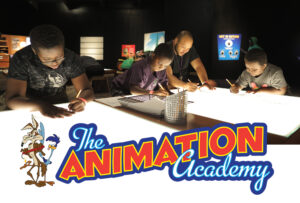
Get “drawn” into the world of animation!
 Step into your favorite Saturday-morning cartoons and explore the remarkable world of storytelling through animation. Our much-anticipated summer exhibition, The Animation Academy: From Pencils to Pixels, invites visitors of all ages to leap into the fascinating realm of the cartoon genre. This unique exhibit provides a rare glimpse into the magic behind some of the most beloved animated films and characters, and offers a comprehensive exploration of the art, science, technology and history of animation.
Venture through the animation process, from concept and character creation to storyboarding, rendering and final production. Explore original storyboards, scripts and narrative techniques used in classic animation before putting your own stop-motion movie skills to the test!
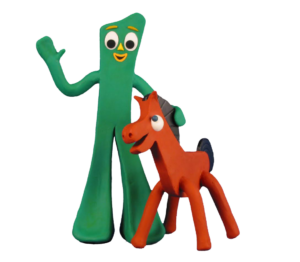
Interactive stations and photo-ops add to the experience. Watch mesmerizing illusions in the world’s largest 3D zoetrope. Snap a photo in The Simpsons living room, strike a pose with Po from Kung Fu Panda or meet Gumby, the beloved, green, clay humanoid and his sidekick Pokey.
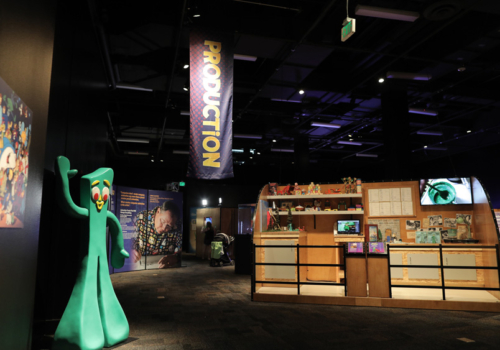

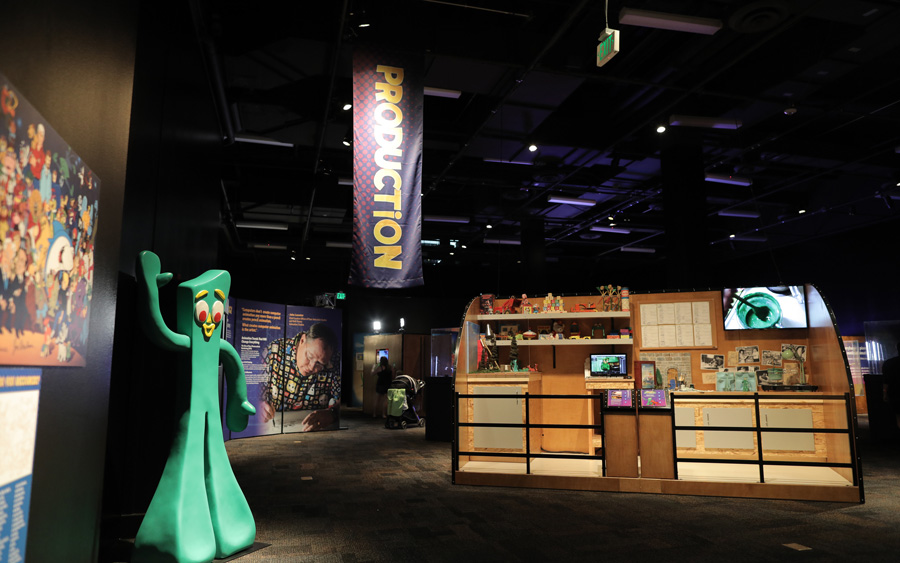
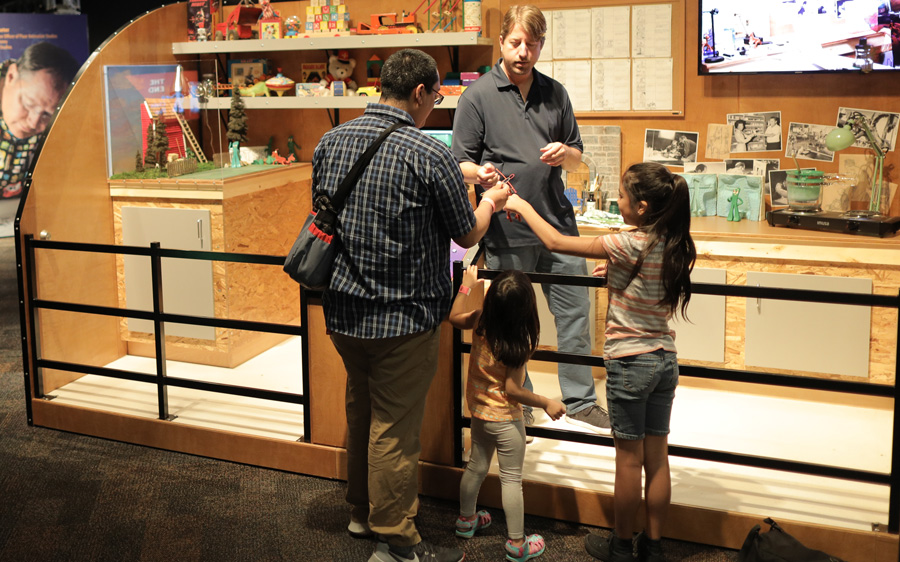
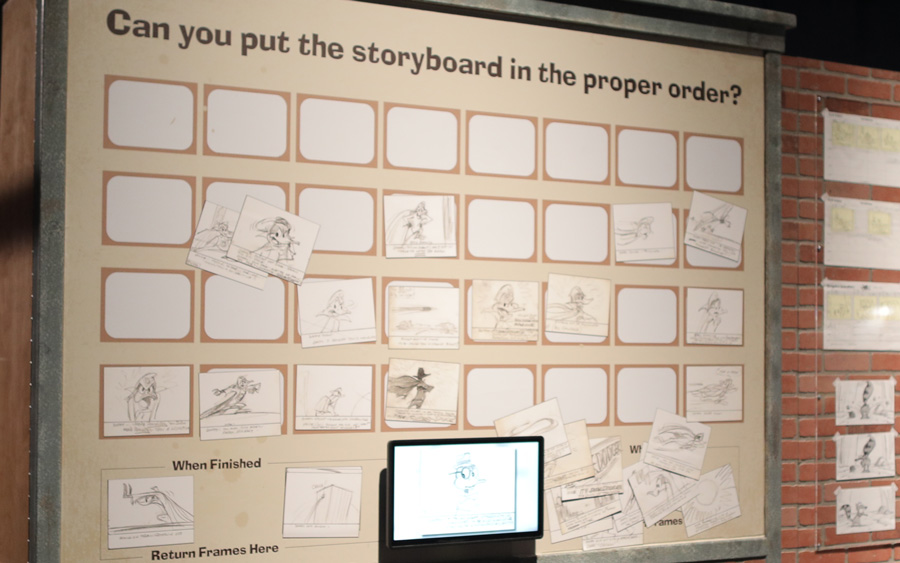
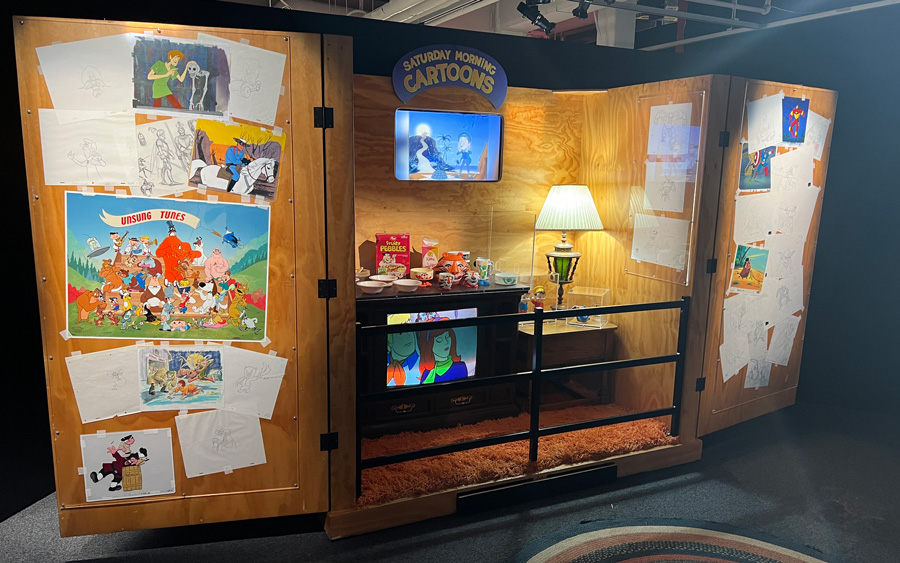
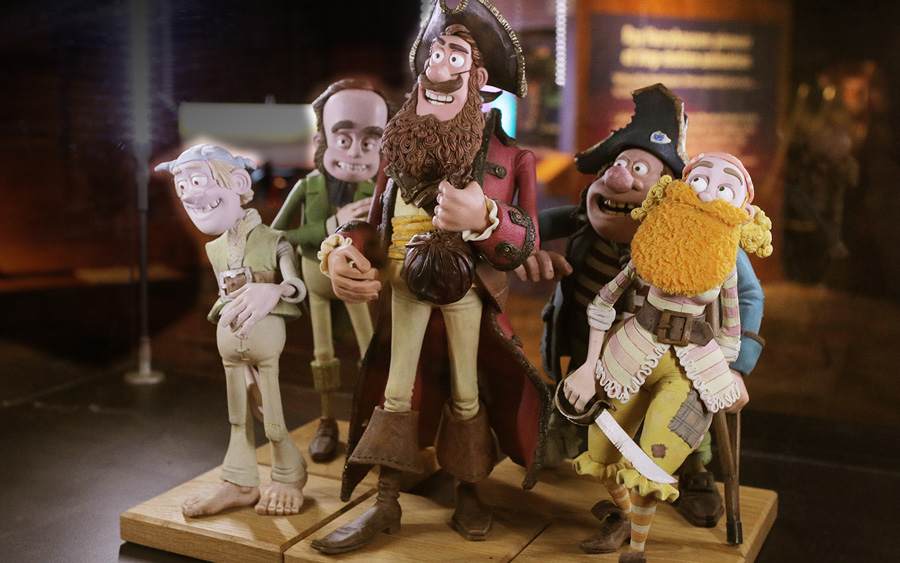
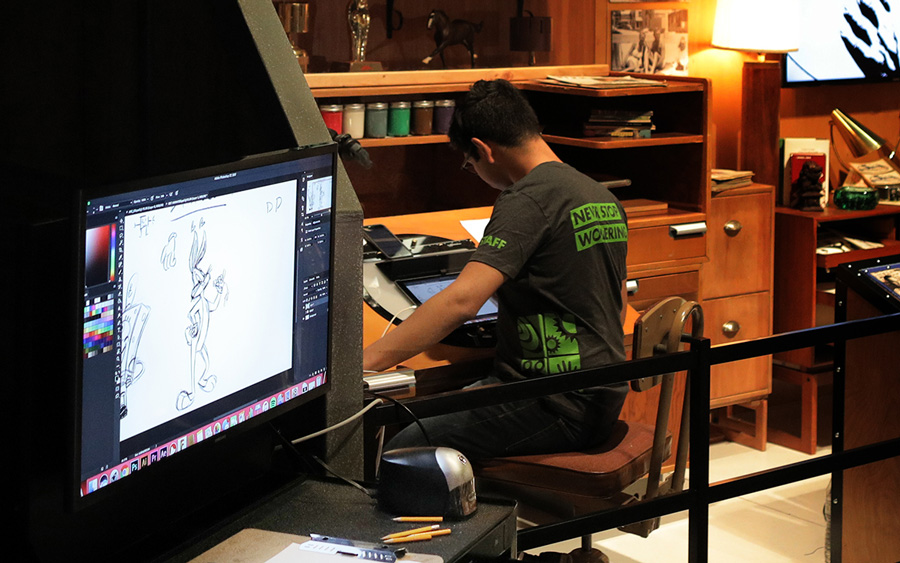
Exhibit Highlights:
- The world’s largest 3D zoetrope
- 2D and 3D stop-motion interactives and tracing stations
- Animation university experience
- “The Simpsons” set photo-op
- Shrek KEVA castle interactive
- Magnetic storyboard, RFID animation process and spin browser interactives
- Chuck Jones Studio interactive
- Guest artist workshop experience
- Gumby workshop/studio interactive
- Exclusive 60-year history of Gumby timeline with original puppets
- Exclusive Clokey Studios original character puppets and dioramas
- Ray Harryhausen original Tortoise and the Hare set interactive
- Saturday-morning cartoons experience
- Original Shrek prototype maquettes
- Electronic watercolor wall interactive
- Chromakey social media station
Animation Academy: From Pencils to Pixels®, produced by Stage 9 Exhibits and distributed by Exhibits Development Group, provides BIG fun for all visitors. LOONEY TUNES and all related characters and elements provided by the Chuck Jones Center for Creativity and are TM and © Warner Bros. All Rights Reserved. GUMBY and all related characters and elements TM and © Clokey Enterprises.
 |
 |
SUPPORTED LOCALLY BY
 |
|
Verhalen Family
|
|
|
|
MEDIA SPONSOR |
||||


EXHIBIT PROGRAMMING

STORYTELLERS: ARTISTS FROM OUR OWN BACKYARD
NOW – August 31, 2025
In conjunction with The Animation Academy, The Durham Museum has developed a companion exhibition featuring artists and storytellers from Nebraska whose work in various media is inspiring dreamers of all generations. Through cartoons, illustrations, mixed media, musical compositions and computer animation, the work of these artists helps a story jump off the page. The display features examples from comic books and children’s books to the big screen and shows how Nebraskan artists tell different types of stories through their work.
Featured artists include: Bruce Arant, Michael Burton, Caitlin Cass, Trent Claus, Drew Conley, Bob Hall, Timothy James Hantula, Cale Oglesby, Henry Payer and Chip Thompson.
NATURE’S WRATH: The 1975 TORNADO
NOW – AUGUST 3, 2025
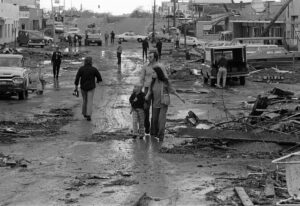
The Durham Museum Photo Archive, The Omaha Sun Collection, 35mm-15302-003, 1975
 Fifty years ago, two days of intense storms hit the Midwest. On May 6, 1975, the air was humid and the skies continued to darken in Omaha. The first report of tornado sightings came just after 4PM. By 5PM, the twister had dispersed and significant damage had taken place within that hour.
Photographers captured moments such as the tornado’s approach, seen best through winner’s circle photos taken from the Ak-Sar-Ben racetrack, and the destruction left behind. What they also captured, however, were the citizens and first responders out on the streets assisting wherever possible. Using images from the Photo Archive, see the impact of this storm from different viewpoints and a community coming together in its aftermath.
Research assistance was provided by The Durham Museum intern, Olivia Fiore, University of Nebraska-Lincoln graduate.
OMAHA’s WORLD’S FAIR OF AVIATION, 1946
NOW – SEPTEMBER 7, 2025
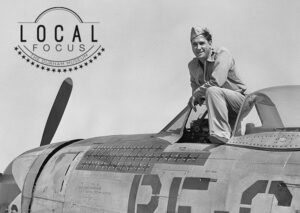
The Durham Museum Photo Archive, John Savage Collection, JS16-005
Omaha’s Offutt Field hosted the World’s Fair of Aviation in July 1946. With an event anticipated to be “the biggest thing that Omaha has done since the Trans-Mississippi Exposition,” the Knights of Ak-Sar-Ben stepped up as a sponsor to accomplish the task. The event included an indoor exhibit space of 120,000 square feet and also featured air shows with a wide range of military aircraft. In terms of attendance, anywhere from 80,000 to over 100,000 people experienced this incredible local spectacle.”
This nine-photo display features images ranging from a German V-2 rocket and “Flying Boxcar” aircraft to the opening ceremony’s ribbon cutting, and was curated by The Durham Museum intern, Mina Bussa, University of Nebraska at Omaha student.
REDEFINING BALANCE: THE IMPEACHMENT OF JUSTICE SAMUEL CHASE
NOW – NOVEMBER 2, 2025
 As the United States approached its 30th birthday in 1804, the nation’s leaders faced various challenges of running a young country. There were two political parties, the Federalists and the Democratic-Republicans, competing for influence in government positions and a notable impeachment that set a precedent for the checks and balances between government branches. Supreme Court Justice Samuel Chase was the first, and only, Supreme Court Justice impeached by Congress, though he was acquitted of all charges. To learn how it played out, visit this display and view items from the Byron Reed Collection that are connected to this decisive trial.
Research assistance was provided by The Durham Museum intern, Griffin Saunders, University of Nebraska-Omaha graduate.
ADMISSION
Adults: $15*
Seniors (62+): $12*
Military/Veteran: $12*
Children (ages 3 – 12): $8*
*PLUS TAX
Children 2 years and under FREE
Members: FREE!
BOOK YOUR TICKET »
Advance reservations are encouraged, but walk-ins are welcome.
Members, your free admission discount is applied near the end of the online registration process.
